
Mastering Marketing ROI Analysis: Measuring Digital Marketing ROI Effectively
Digital marketing is a powerful tool for local businesses in Maryland. But how do you know if your efforts are paying off? Measuring your marketing ROI is the key. It tells you what’s working, what’s not, and where to invest next.
I’m here to guide you through the process of measuring digital marketing ROI effectively so you can boost your online presence and grow your revenue.
Understanding Marketing ROI Analysis
Marketing ROI analysis is more than just crunching numbers. It’s about connecting your marketing activities to real business results. When you analyze ROI, you evaluate the return you get from every dollar spent on marketing. This helps you make smarter decisions and optimize your campaigns.
Here’s how to think about it:
Investment: How much money did you spend on your digital marketing efforts? This includes ads, content creation, tools, and labor.
Return: What revenue or value did those efforts generate? This could be direct sales, leads, or even brand awareness that leads to future sales.
ROI Formula: The basic formula is [Net Profit-Marketing Cost]/Marketing Cost. The calculation can then be multiplied by 100 to turn into a percentage.

That means you earned back your investment plus double the amount.
Why Marketing ROI Analysis Matters for Local Businesses
Local businesses in Maryland face unique challenges. Competition is tight, and budgets are often limited. Marketing ROI analysis helps you:
Focus on what works: Stop wasting money on ineffective channels.
Justify your marketing spend: Show stakeholders the value of your campaigns.
Plan for growth: Allocate resources to the highest-performing strategies.

Key Metrics to Track for Marketing ROI Analysis
To measure ROI effectively, you need to track the right metrics. Here are the most important ones for digital marketing:
1. Conversion Rate
This tells you how many visitors take a desired action, like making a purchase or filling out a contact form. A higher conversion rate means your marketing is driving valuable actions.
2. Customer Acquisition Cost or "Cost to Acquire" (CAC/CTA)
CAC is the total cost to acquire a new customer. Calculate it by dividing your total marketing spend by the number of new customers gained. Lower CAC means more efficient marketing.
3. Customer Lifetime Value (CLV)
CLV estimates the total revenue a customer will generate over their relationship with your business. Knowing this helps you decide how much to spend on acquiring customers.
4. Traffic Sources
Identify where your visitors come from: organic search, paid ads, social media, or referrals. This helps you understand which channels deliver the best ROI.
5. Engagement Metrics
Track likes, shares, comments, and time spent on your site. Engagement indicates how well your content resonates with your audience.
6. Bounce Rate
A high bounce rate means visitors leave your site quickly. This could signal poor user experience or irrelevant content.
By monitoring these metrics, you get a clear picture of your marketing performance and can adjust your strategy accordingly.
How to Measure Digital Marketing ROI in Practice
Now that you know the theory, let’s get practical. Here’s a step-by-step approach to measuring your digital marketing ROI effectively:
Step 1: Set Clear Goals
Start with specific, measurable goals. Do you want more website traffic, leads, or sales? Define what success looks like.
Step 2: Track Your Spending
Keep detailed records of all marketing expenses. This includes ad spend, software subscriptions, and labor costs.
Step 3: Use Analytics Tools
Leverage tools like Google Analytics, Facebook Insights, and email marketing platforms to gather data on your campaigns.
Step 4: Attribute Revenue
Link your marketing efforts to actual sales. This can be done through tracking codes, promo codes, or CRM software.
Step 5: Calculate ROI
Use the ROI formula to see how your campaigns perform. Compare different channels and campaigns to find the best return.
Step 6: Optimize and Repeat
Use your insights to tweak your strategy. Double down on what works and cut what doesn’t.
For a detailed guide on how to measure digital marketing roi, check out this resource that breaks down the process with examples and tools.

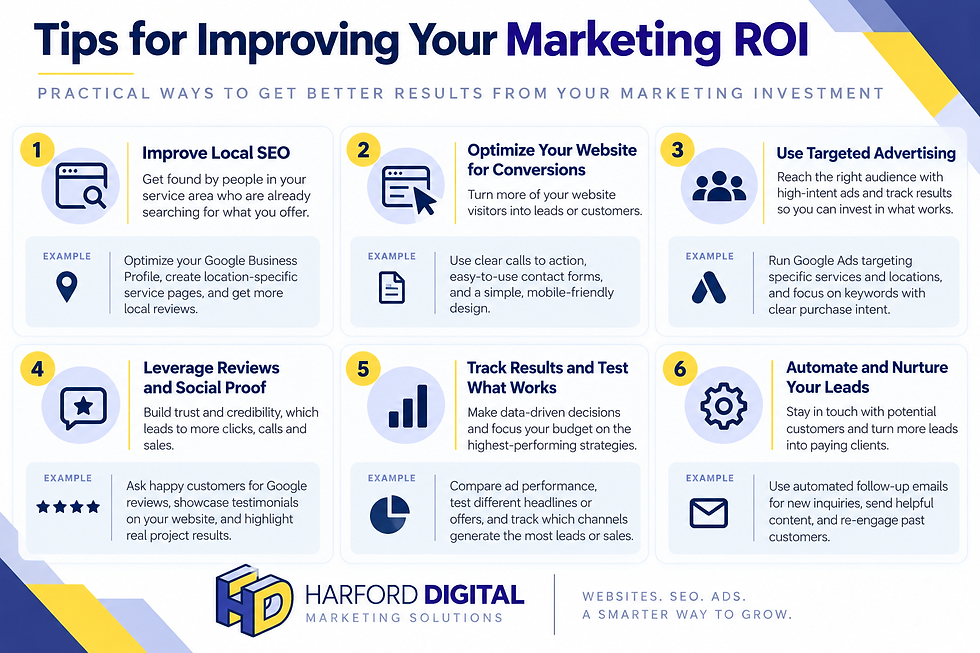
Tips for Improving Your Marketing ROI
Measuring your marketing ROI is just the beginning. Improving it means attracting the right audience, turning more visitors into customers, and making smarter decisions about where to invest your marketing budget.
Here are six practical strategies to help your business get better results.
1. Improve Your Local SEO
Make it easier for potential customers to find your business when searching for services in your area. Optimize your Google Business Profile, create location-specific website content, and target keywords that reflect what your customers are searching for.
2. Optimize Your Website for Conversions
Getting visitors to your website is only half the battle. Make sure your website encourages them to take action with clear calls to action, easy-to-use contact forms, fast loading times, and a mobile-friendly design.
3. Use Targeted Advertising
Focus your advertising budget on reaching people who are most likely to become customers. For example, Google Ads can target users actively searching for specific services in your area, helping you generate more qualified leads instead of paying for less relevant traffic.
4. Leverage Reviews and Social Proof
Positive reviews and customer testimonials help build trust and influence purchasing decisions. Encourage satisfied customers to leave Google reviews, feature testimonials on your website, and highlight successful projects or customer experiences.
5. Track Results and Test What Works
Use tools like Google Analytics and Google Ads conversion tracking to understand which marketing efforts generate leads and sales. Test different headlines, landing pages, and advertising strategies, then shift your budget toward the approaches delivering the strongest results.
6. Automate and Nurture Your Leads
Not every potential customer is ready to buy immediately. Automated follow-up emails, lead reminders, and customer outreach can help you stay connected with prospects, improve response times, and turn more inquiries into paying customers.
The Bottom Line: Improving your marketing ROI isn't always about spending more. It's about making your existing marketing budget work harder by attracting qualified prospects, improving conversion rates, and investing in strategies that deliver measurable business results.
Moving Forward with Confidence
Measuring digital marketing ROI effectively is a game-changer for local businesses. It empowers you to make data-driven decisions, maximize your budget, and grow your customer base. Remember, the key is to track the right metrics, set clear goals, and continuously optimize your efforts.
Start today by reviewing your current marketing activities. What’s working? What needs improvement? Use the insights you gain to build a stronger, more profitable digital marketing strategy.
Your business deserves smart marketing that delivers real results. Take control of your marketing ROI analysis and watch your Maryland business thrive!
Not sure where to start? Consider talking to a marketing consultant!



Comments